


How the J. Paul Getty Museum and LACMA Improved Shared Collections Management with TMS

Joint Ownership of the Mapplethorpe Collection: Best Practices in Learning How to Share
In 2011, the J. Paul Getty Museum and the Los Angeles County Museum of Art (LACMA) jointly acquired a collection of over 2,000 works by Robert Mapplethorpe from the Robert Mapplethorpe Foundation (RMF). This historic acquisition is unique in many ways: not only is this one of the largest single artist gifts of the last decade[1], but the joint ownership of an entire collection by two institutions is unusual. The Getty and LACMA, both Gallery Systems clients, use The Museum System (TMS) for their collections management. By using TMS, they found a way to share and access digital records, assign object numbers and locations for both museums, and properly track insurance and copyright for each individual object.
Challenges
In planning for the acquisition, the museums identified the main concerns with joint ownership, which included numbering, cataloguing, access, and conservation. Carole Campbell, Former Registrar for Collections Management at the J. Paul Getty Museum, explains, “Since we were taking the lead in this project, we needed to start developing processes and sharing with LACMA, as well as incorporating LACMA’s procedures and policies into ours. As far as cataloguing the collection, it had to be done in a very short time period: one year.” The two museums also needed to establish loan requirements and documents, exhibition procedures, and a system to keep the collection documentation accurate and updated in the future.
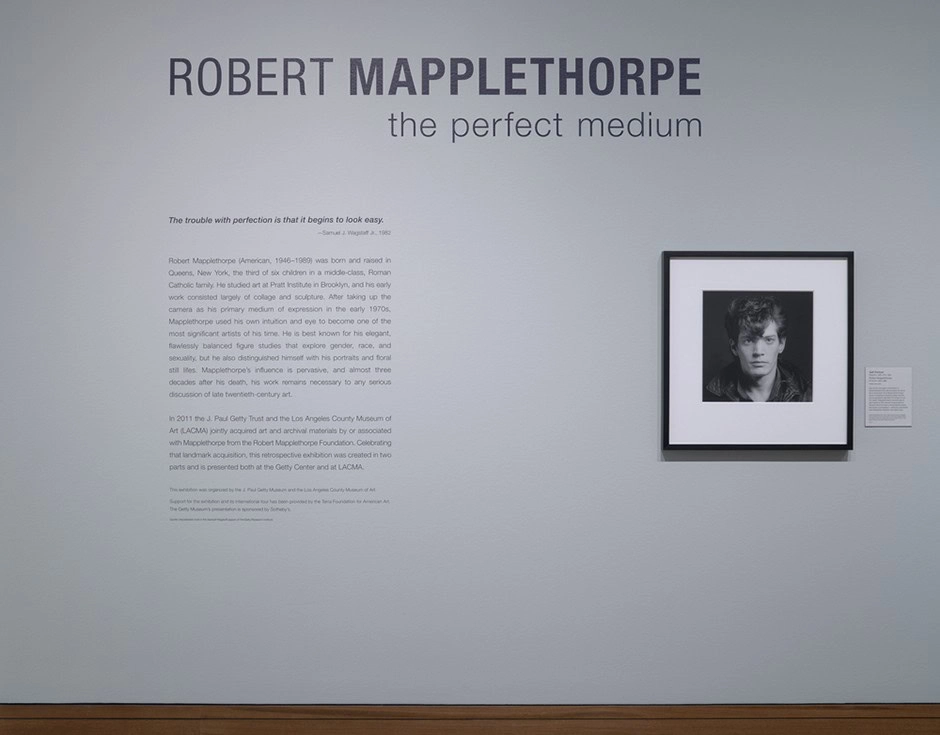
Self-Portrait, 1980. Robert Mapplethorpe (American, 1946-1989). Gelatin silver print. Jointly acquired by the J. Paul Getty Trust and the Los Angeles County Museum of Art; partial gift of The Robert Mapplethorpe Foundation; partial purchase with funds provided by the J. Paul Getty Trust and the David Geffen Foundation. © Robert Mapplethorpe Foundation
Solution
During project preparation, the collections teams at both the Getty and LACMA were pleased to see they utilized the TMS collections management system. “TMS made the acquisition easier because we were both using it. The Getty has been managing our collection with TMS since 1999 so we know it inside and out,” explains Carole. By using TMS to mass upload and share data between the organizations, develop workflows needed for loans and exhibitions, and produce reports on the collection, the Getty and LACMA were able to accomplish their goals while meeting their tight deadline.
Outcome
During the acquisition, the Getty and LACMA generated many solutions for their joint ownership questions. While they both use TMS, they catalogue in slightly different ways and needed to make their data compatible. Carole explains, “We discussed the differences in how we catalogue, and where we put information in TMS. There were certain things we agreed to do in the same way. For example, ensuring object numbers, object IDs, and constituent IDs are in each other’s system.”
To accession the collection, Carole used a custom Microsoft Access upload program developed by the Getty to mass upload to TMS, rather than entering each object individually, saving considerable time. The museums established that the Getty would be the primary data site, so once the collection data was in place, it needed be exported from the Getty’s database and uploaded to LACMA’s. Carole explains the process, “I worked together with LACMA, and accessed a test database at the Getty to match LACMA’s version of TMS…I created the table in Excel, which emulated LACMA’s data structure, so data was exported in a format that made it easy for them to upload.”
To solve the challenges with loan processes, Carole worked with the team at LACMA to design a workflow for lending agreements. “We put a loan moratorium in place for a full year and agreed not to send out any loans,” explains Carole, “During that time period, we worked to adjust our forms in TMS for joint ownership and to include specific wording for the Mapplethorpe loans.”
Similar to loan issues, the Getty and LACMA also had to make decisions about handling exhibitions. Carole explains that the established workflow simplifies the process for shipping objects and pulling objects lists for the collection:
We use our TMS List views to do exports for exhibitions, and because TMS recognizes co-ownership objects, it actually prints the LACMA numbers automatically. List views and reports in TMS are essential for us. We can export data to different formats for LACMA, we can generate reports when people need them, and we can post statistics from TMS to track workflow. Additionally, we can see how many requests we’ve had for loans from the Mapplethorpe collection, and their current status.
The Getty and LACMA are prepared to periodically swap data changes to keep their respective object records consistent. To date, the Getty has provided data to LACMA by exporting the Getty’s current data out of TMS, to Excel, then comparing the export to the last export sent to LACMA. Changes between the two exports are automatically highlighted, and only those changes are sent to LACMA for input. “The exchange of data has really improved how we work back and forth to manage the collection,” says Carole.
TMS has also helped both institutions in ways they hadn’t originally anticipated. The methods of communication utilized by the Getty and LACMA have not only smoothed the complexities of joint ownership, but have helped to develop relationships among the staff at the two institutions. “I can’t tell you how much we communicate with each other now!” laughs Carole. By sharing best practices, the Getty and LACMA are learning from each other, making solid multi-institutional partnerships, and working together to preserve a historic collection. “We’re sharing the same system and the data between the two of us: we can communicate well together in TMS, so we set each other to be in sync…having the same database and communicating in the same data language is really helpful.”
[1] James Crump, “LACMA, Getty to share Robert Mapplethorpe artwork” Los Angeles Times, February 8, 2011.
The Results
-
Successfully managed a jointly owned collection of more than 2,000 artworks
-
Created shared cataloguing and documentation workflows across two institutions
-
Streamlined loan and conservation workflows for shared collection stewardship
Poppy, 1988. Robert Mapplethorpe (American, 1946-1989). Dye imbibition print. Jointly acquired by the J. Paul Getty Trust and the Los Angeles County Museum of Art; partial gift of The Robert Mapplethorpe Foundation; partial purchase with funds provided by the J. Paul Getty Trust and the David Geffen Foundation. © Robert Mapplethorpe Foundation

One Platform for Collections Management,
Conservation, Media, and Publishing
TMS Collections

TMS Media Studio

TMS Conservation Studio

eMuseum
More Success Stories

Why Galleries Can No Longer Wait to Modernize Their Gallery Management Software
The Art World’s Technology Reckoning Only 19% of galleries call themselves technology leaders, yet 43% plan to invest more in online sales this year, according to Artsy’s Art Market…

Collective Conversations with Chad Petrovay
Professional Services Specialist, Gallery Systems With a museum career spanning multiple institutions and over a decade partnering with Gallery Systems clients, Chad brings a rare combination of…

Why Galleries Can No Longer Wait to Modernize Their Gallery Management Software
The Art World’s Technology Reckoning Only 19% of galleries call themselves technology leaders, yet 43% plan to invest more in online sales this year, according to Artsy’s Art Market…
Collective Conversations with Chad Petrovay
Professional Services Specialist, Gallery Systems With a museum career spanning multiple institutions and over a decade partnering with Gallery Systems clients, Chad brings a rare combination of…
Why Galleries Can No Longer Wait to Modernize Their Gallery Management Software
The Art World’s Technology Reckoning Only 19% of galleries call themselves technology leaders, yet 43% plan to invest more in online sales this year, according to Artsy’s Art Market…
Collective Conversations with Chad Petrovay
Professional Services Specialist, Gallery Systems With a museum career spanning multiple institutions and over a decade partnering with Gallery Systems clients, Chad brings a rare combination of…
Why Galleries Can No Longer Wait to Modernize Their Gallery Management Software
The Art World’s Technology Reckoning Only 19% of galleries call themselves technology leaders, yet 43% plan to invest more in online sales this year, according to Artsy’s Art Market…
Collective Conversations with Chad Petrovay
Professional Services Specialist, Gallery Systems With a museum career spanning multiple institutions and over a decade partnering with Gallery Systems clients, Chad brings a rare combination of…
Why Galleries Can No Longer Wait to Modernize Their Gallery Management Software
The Art World’s Technology Reckoning Only 19% of galleries call themselves technology leaders, yet 43% plan to invest more in online sales this year, according to Artsy’s Art Market…
Collective Conversations with Chad Petrovay
Professional Services Specialist, Gallery Systems With a museum career spanning multiple institutions and over a decade partnering with Gallery Systems clients, Chad brings a rare combination of…