Professional Services Specialist, Gallery Systems
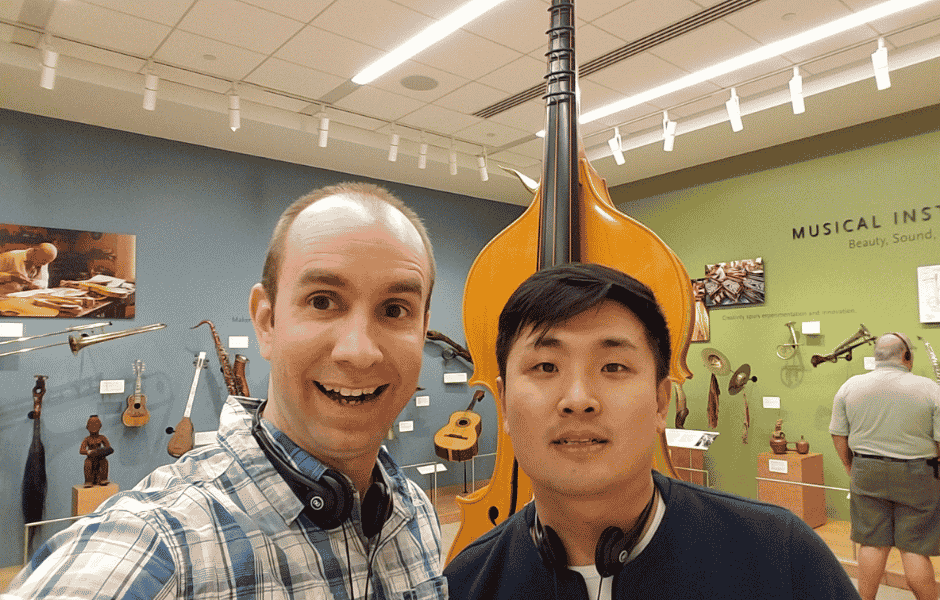
With a museum career spanning multiple institutions and over a decade partnering with Gallery Systems clients, Chad brings a rare combination of technical precision and genuine curiosity to every project he takes on. He began his career at the Walters Art Museum, where he led the digital publication of the institution’s first 5,000 objects a month ahead of schedule, before bringing that same rigor to the Musical Instrument Museum (MIM), where he was the inaugural TMS Administrator and part of the pre-opening team building the museum, its collection, and its database from the ground up. Now serving as a Professional Services Specialist, Chad shares insights into what makes TMS implementations succeed, the growth of the Professional Services team, and the problem-solving mindset that keeps him energized day to day.
Please can you tell us a bit about your museum background before coming to Gallery Systems?
I have had the privilege of serving as the inaugural TMS Administrator for three different museums: configuring the system to meet each institution’s business needs, developing standards and workflows for data capture, and being the in-house report writer and trainer.
At each institution, the challenges were unique. At MIM, where I was part of the pre-opening team, we were building the museum, collection, and database from the ground up. The Walters had migrated from a legacy system and wanted to prioritize data cleanup; there I spearheaded the project to digitally publish the first 5,000 objects on their online collections portal (which we finished a month ahead of schedule).
I’ve sat on both sides of the table enough times to know exactly what our clients are dealing with. Now I bring this wealth of experience to clients who are looking to implement TMS in their own institutions.
What does a typical day look like for you as a Professional Services Specialist?
Because my job is driven by client projects, every day is a little different. I might spend the day installing and configuring TMS for a new client, upgrading an existing database to our most recent release, or conducting a training session. My favorite days are the ones where I get to grab a Mountain Dew, crank up the pop rock, and lose myself in programming: creating a Crystal Report, developing a PowerShell script to solve a problem, or writing SQL for a data migration project.
What’s one part of your role you find particularly rewarding or challenging?
Ever since I was young, I loved detective stories and TV shows, logic puzzles (like stories with holes in the middle), murder mysteries, and escape rooms. So, the most rewarding thing about my job is that I get to craft solutions to problems.
How has the professional services at Gallery Systems evolved since you joined the team?
Since I first joined Gallery Systems 12 years ago, the North American PS team has expanded from four people to a team of ten people. This gives us an expanded bandwidth to tackle client projects, dramatically reducing the time clients must wait for projects to start.
Can you share a memorable challenge you’ve helped a client solve, and what you learned from it?
I had a client that wanted to augment their constituent records with information from the Getty Union List of Artist Names (ULAN). I developed a process to import the ULAN dataset, reconcile the constituent records with the ULAN records, compare data between the two records, and update the constituent records with missing values. If a client can dream it, we can make it a reality.
If a client can dream it, we can make it a reality.
What advice would you give to a museum professional just starting to use the TMS Suite or working with our services team for the first time?
Do you know how they say that when you move into a new house, you should live with it for a year before making any major modifications? I think the same thing applies to your collections management system.
When you first get TMS Collections, prioritize configuring the authority values to meet your needs. If you had a data migration, this may have been done for you. But check these for accuracy, clean up any redundant or duplicate values, and add any new values that are needed. This last one is true for authorities in TMS that may not have been present in your legacy system.
If there are fields that you need which are not included in the system data views of TMS Collections, create a custom data entry view to expose those fields. Don’t try to optimize all the data entry views – just add the fields that you need.
Next, focus on your reporting needs. What reports does your institution need to operate and make decisions? Being able to extract data from your system in a template that is fit for use will make the biggest difference for your users.
Now wait while your users settle into TMS Collections. After a while, your users will be more informed and can better engage in the question “How can we modify the data entry views to optimize your workflow?” Trying to engage in this activity before users learn the ins and outs of TMS means you will probably end up cloning your legacy system interface – because that’s what your users already know.
This stems from the best advice that I got at the start of my career from Rob Morgan – Don’t rush into modifying the user interface.

What’s one fun or unexpected fact about you that might surprise people?
I’m included in the acknowledgements for “Ischnopterapion (Chlorapion) Virens (Herbst) (Coleoptera: Curculionoidea: Brentidae: Apioninae), A Palearctic Clover Pest New to North America: Recognition Features, Distribution, and Bionomics” in Proceedings of the Entomological Society of Washington, 102(1), 2000, pp 151-161.
Chad’s path from TMS Administrator to Professional Services Specialist illustrates the value of first-hand museum experience in shaping solutions that truly meet institutions where they are. His enthusiasm for solving complex data challenges, paired with his steady, patient approach to onboarding new users, underscores what makes Gallery Systems’ Professional Services team so effective. As institutions chart their own path with the TMS Suite, Chad’s advice is clear: prioritize your authority values, focus on your reporting needs first, and give your team time to settle in before reshaping the interface around them. With his technical expertise and the support of the broader Professional Services team, clients can approach even the most complex data projects with confidence.
If you’re ready to streamline your collections management strategy or have questions about how Gallery Systems can support your institution, contact us today to speak with an expert.