


How Chapman University Art Collections Improved Collections Management with TMS
Who They Are

Cataloguing a Museum without Walls
Challenges
When Natalie Lawler, Assistant Collections Registrar and Preparator, joined Chapman University Art Collections she found that the collections had no support system for object and collections management—no way to track object locations, manage loans and acquisitions, or keep collection research organized for academics or exhibition planning.
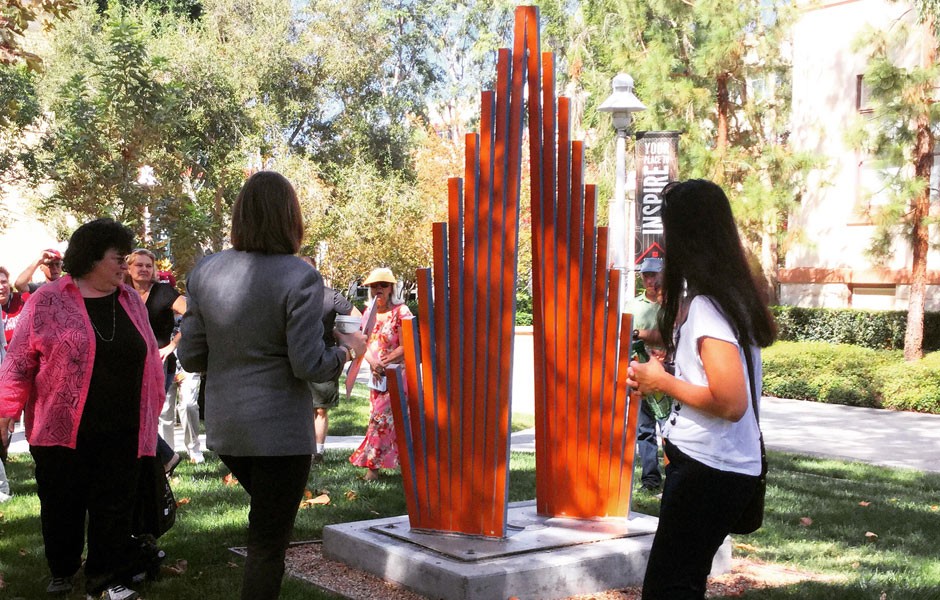
The lack of a central collections management system frustrated students and staff who wanted to explore objects in the collection. Efforts to research collection objects for class assignments took a disproportionate amount of time. “Our offices are in one place, our storage is in another and the collection is all over campus,” explains Natalie. Constrained by time-consuming and inefficient workflows, the team at Chapman University realized they needed a new solution for managing their collections.
Solutions
After considering all their collection management options, Natalie’s team decided to deploy The Museum System (TMS) to support their collections. They felt the robust customization capabilities allowed TMS to not only fit the collections’ current needs, but also supported collection sustainability, “We loved having more tools than we needed rather than just the basic ones we wanted initially. We have many future plans—so we’d much rather have a bigger system than a smaller one.”
One feature that drew Natalie to TMS was its flexibility and easy configurability. “Working with Gallery Systems has been amazing. They’ve been helping us configure functionality and processes,” Natalie shares. “Everyone has been so responsive.” This flexibility allows TMS to support additional departments on campus, and they anticipate a wider campus adoption in the future.
“Working with Gallery Systems has been amazing. They’ve been helping us configure functionality and processes, everyone has been so responsive.”

Outcome
In the preparation stage of the collection catalogue, the Chapman University team knew they needed a strong foundation for their collection information. Natalie began by researching the collection objects. “Most of our information was spread across campus because of how the university previously structured the collection. We consolidated information into one master spreadsheet, and then worked to correspond that information to the data input into TMS.” Natalie found that accessing Gallery Systems’ global community of museum professionals was essential in determining the information her team needed for the new system. “I contacted other institutions to learn how they organized the system. Much of the project was about getting the core information and main object record correct, which was one of the hardest parts.” By engaging with their network of university staff, former museum employees, and their contacts at other museums, they were able to make informed decisions about the information they were consolidating into TMS. The team’s hard work has already returned valuable benefits. Natalie cited, as one example, the relationship the collection holds with professors. “Our Art History faculty will contact me if they give their students an assignment to use our collection. They want to know what’s on view and where, so being able to give them that information quickly is so helpful.” Now, Natalie’s team can simply share a detailed location report—including all of the objects’ current and historical location information, instead of physically surveying and manually recording all objects—reducing the probability of human error and saving time.
“Our Art History faculty will contact me if they give their students an assignment to use our collection. They want to know what’s on view and where, so being able to give them that information quickly is so helpful.”
Chapman administration wants the collection to play a key educational role within the university. “The learning opportunity is great for our students. So many institutions use TMS, it becomes tangible work experience. They can learn the system and then progress to an internship or job with a great set of skills,” say Lindsay Shen, Director of Art Collections. “We align ourselves with the University’s mission. We’re not an independent entity, we help fulfill the parent institution. That’s why the teaching aspect in TMS was so important, it helps our students grow.”
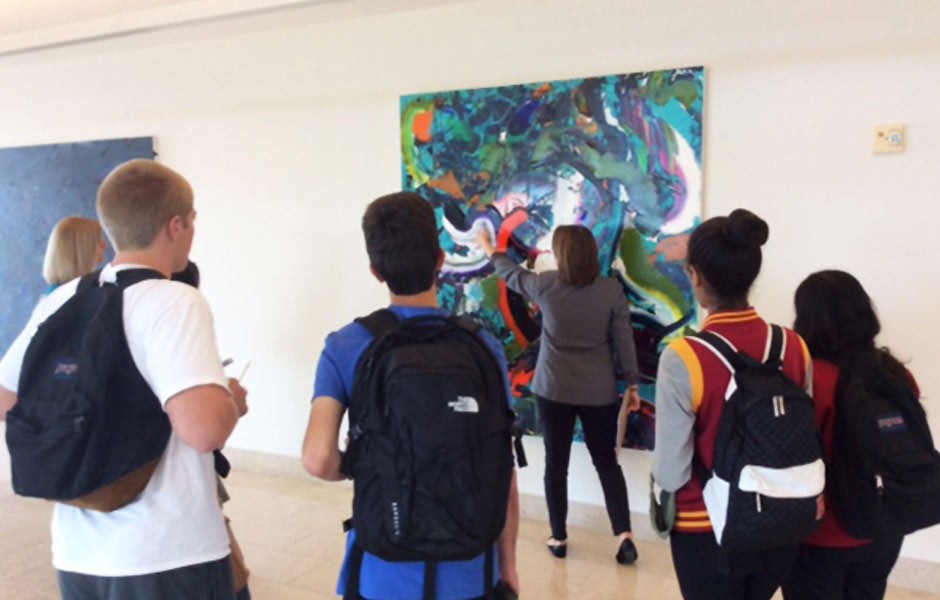
Natalie has found that student workers greatly appreciate the flexibility TMS gives them, and using the TMS Object Package Explorer, a tool to select and save groups of object records, has enhanced the exhibition planning process, and made collaboration with students more engaging. Students have a two-way relationship with TMS: not only do they use it for their own research, but they work directly in TMS to create content such as blogs and collection notes. “When they research artists or pieces, they can add that information to the record and enrich our data in that way,” Natalie explains.
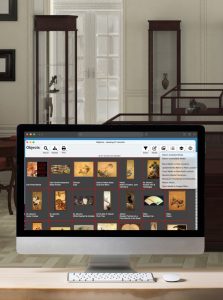
Armed with an effective TMS workflow and a well-appointed and growing catalogue, the team at Chapman University is looking ahead to exciting possibilities to provide even greater engagement with students and the academic community. “The larger goal is to get eMuseum,” Natalie says, referring to Gallery Systems’ web publishing toolkit. “With eMuseum we can really turn the collection into a resource for all of campus, our community, and whoever visits our website. Opening the collection in that way would be really exciting.”

One Platform for Collections Management,
Conservation, Media, and Publishing

TMS Suite
eMuseum
More Success Stories

Why Galleries Can No Longer Wait to Modernize Their Gallery Management Software
The Art World’s Technology Reckoning Only 19% of galleries call themselves technology leaders, yet 43% plan to invest more in online sales this year, according to Artsy’s Art Market…

Collective Conversations with Chad Petrovay
Professional Services Specialist, Gallery Systems With a museum career spanning multiple institutions and over a decade partnering with Gallery Systems clients, Chad brings a rare combination of…

Why Galleries Can No Longer Wait to Modernize Their Gallery Management Software
The Art World’s Technology Reckoning Only 19% of galleries call themselves technology leaders, yet 43% plan to invest more in online sales this year, according to Artsy’s Art Market…
Collective Conversations with Chad Petrovay
Professional Services Specialist, Gallery Systems With a museum career spanning multiple institutions and over a decade partnering with Gallery Systems clients, Chad brings a rare combination of…
Why Galleries Can No Longer Wait to Modernize Their Gallery Management Software
The Art World’s Technology Reckoning Only 19% of galleries call themselves technology leaders, yet 43% plan to invest more in online sales this year, according to Artsy’s Art Market…
Collective Conversations with Chad Petrovay
Professional Services Specialist, Gallery Systems With a museum career spanning multiple institutions and over a decade partnering with Gallery Systems clients, Chad brings a rare combination of…
Why Galleries Can No Longer Wait to Modernize Their Gallery Management Software
The Art World’s Technology Reckoning Only 19% of galleries call themselves technology leaders, yet 43% plan to invest more in online sales this year, according to Artsy’s Art Market…
Collective Conversations with Chad Petrovay
Professional Services Specialist, Gallery Systems With a museum career spanning multiple institutions and over a decade partnering with Gallery Systems clients, Chad brings a rare combination of…
Why Galleries Can No Longer Wait to Modernize Their Gallery Management Software
The Art World’s Technology Reckoning Only 19% of galleries call themselves technology leaders, yet 43% plan to invest more in online sales this year, according to Artsy’s Art Market…
Collective Conversations with Chad Petrovay
Professional Services Specialist, Gallery Systems With a museum career spanning multiple institutions and over a decade partnering with Gallery Systems clients, Chad brings a rare combination of…