


How the Royal Tyrrell Museum Improved Natural History Collections Management with TMS and eMuseum
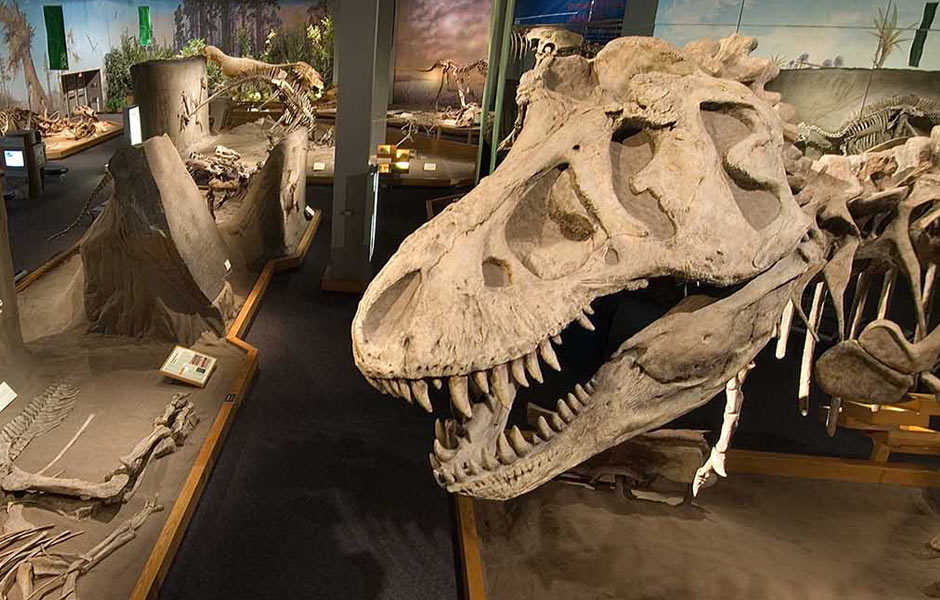
Who They Are
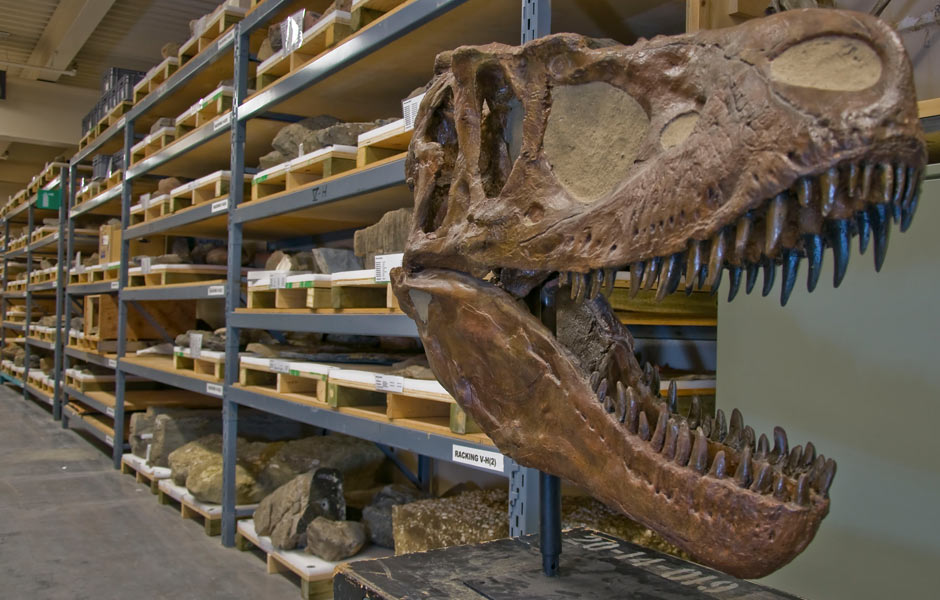
Standardizing Cataloguing for a Natural History Collection
Challenges
At the Royal Tyrrell Museum, where there are fossils of every shape and size, finding the best way to catalogue each object is always a challenge. The Museum switched from a spreadsheet-style cataloguing system to TMS in 2001. Initially, they simply wanted to mimic their old system in TMS, but quickly realized that TMS gave them the capability to standardize terminology and catalogue methodology beyond anything they had been able to do in the previous system. For example, their legacy system included a large number of text fields that had to be entered manually.
As Graeme Housego, Collections Assistant at the Museum, points out, “When all your storage locations are text based, six different people can enter the word ‘cabinet’ six different ways, making it hard to locate an object later on.” In addition, for each fossil, the taxonomic hierarchy was being entered manually, a time-consuming and error-prone process.
Solutions
In a push to improve their collections data, the Royal Tyrrell Museum began to standardize their use of TMS. Graeme and the collections management team knew that this would reduce manual data entry, minimize user error, improve loan tracking, and facilitate quick taxonomic changes. After creating drop down menu items specific to their taxonomic hierarchies, as well as storage locations in TMS, they started moving objects into their proper locations. Next, the team configured TMS to ensure the same object details are recorded the same way each time a specimen is catalogued. These fields include information such as fossil type and preparation status.
Outcomes
Since utilizing more of TMS’ functionality and tailoring drop down menu terminology to match their needs, the Royal Tyrrell Museum has, on average, been able to cut the time it takes to input a new record in half. Of their new hierarchy authority controls, Graeme says, “Now when we enter the lowest hierarchical term, such as Albertosaurus, the system completes the taxonomic hierarchy for us, and we can make fast changes to the hierarchy fields if needed.”
Locating objects for loans or research is also faster with the new system. “We have more than 1,000 specimen cabinets and we can now easily track a fossil to its drawer in the cabinet,” explains Graeme.
At any one time, approximately 5,000 of the Royal Tyrrell’s specimens are out on loan, and loans can last up to five years and are spread across the globe. Having a better way to track the movement of these specimens and knowing their exact location is simple with TMS. The software can cross-reference information on shipping dates, insurance details, and shipment value.
For the Museum, one especially useful feature of TMS is the ‘Control Insert’ function that allows staff to quickly access the thesaurus. “This has really helped us standardize our terms in the database and makes data entry as simple and accurate as possible,” says Graeme.
The increased accuracy and availability of data has impacted every department at the Museum. As Graeme explains, “Our researchers have better access to our collection, as do our other departments. When requests for information arise, they can be dealt with quickly, and we know that the most current data is being shared. Having that information available means that people can learn more about our fossils and about what we do as a museum.”
“Now when we enter the lowest hierarchical term, such as Albertosaurus, the system completes the taxonomic hierarchy for us, and we can make fast changes to the hierarchy fields if needed.”
The Museum is currently implementing eMuseum digital publishing software to launch their public online portal. eMuseum integrates with TMS to publish selected data to the website. “We have in excess of 100 visiting researchers each year, and 10 times that number in online requests for data,” says Graeme. “Moving some of our fossil data online, and knowing that the data is accurate, will save us time in answering queries from the community since we can simply direct people to the website. With eMuseum, the end product is an attractive front-facing portal with a similar feel to our website.” The Museum’s online portal will be fully up and running in 2016.
With their fossil data better organized and standardized, and a soon-to-be released online portal of collection information, the Royal Tyrrell Museum is prepared for continued growth as it acquires more fossils and facilitates research and learning for its ever-growing communities. “Throughout the process of fully utilizing TMS, Gallery Systems has been very helpful and quick to respond to questions. They are always easy to talk to,” adds Graeme.

One Platform for Collections Management,
Conservation, Media, and Publishing

TMS Suite
eMuseum
More Success Stories

Why Galleries Can No Longer Wait to Modernize Their Gallery Management Software
The Art World’s Technology Reckoning Only 19% of galleries call themselves technology leaders, yet 43% plan to invest more in online sales this year, according to Artsy’s Art Market…

Collective Conversations with Chad Petrovay
Professional Services Specialist, Gallery Systems With a museum career spanning multiple institutions and over a decade partnering with Gallery Systems clients, Chad brings a rare combination of…

Why Galleries Can No Longer Wait to Modernize Their Gallery Management Software
The Art World’s Technology Reckoning Only 19% of galleries call themselves technology leaders, yet 43% plan to invest more in online sales this year, according to Artsy’s Art Market…
Collective Conversations with Chad Petrovay
Professional Services Specialist, Gallery Systems With a museum career spanning multiple institutions and over a decade partnering with Gallery Systems clients, Chad brings a rare combination of…
Why Galleries Can No Longer Wait to Modernize Their Gallery Management Software
The Art World’s Technology Reckoning Only 19% of galleries call themselves technology leaders, yet 43% plan to invest more in online sales this year, according to Artsy’s Art Market…
Collective Conversations with Chad Petrovay
Professional Services Specialist, Gallery Systems With a museum career spanning multiple institutions and over a decade partnering with Gallery Systems clients, Chad brings a rare combination of…
Why Galleries Can No Longer Wait to Modernize Their Gallery Management Software
The Art World’s Technology Reckoning Only 19% of galleries call themselves technology leaders, yet 43% plan to invest more in online sales this year, according to Artsy’s Art Market…
Collective Conversations with Chad Petrovay
Professional Services Specialist, Gallery Systems With a museum career spanning multiple institutions and over a decade partnering with Gallery Systems clients, Chad brings a rare combination of…
Why Galleries Can No Longer Wait to Modernize Their Gallery Management Software
The Art World’s Technology Reckoning Only 19% of galleries call themselves technology leaders, yet 43% plan to invest more in online sales this year, according to Artsy’s Art Market…
Collective Conversations with Chad Petrovay
Professional Services Specialist, Gallery Systems With a museum career spanning multiple institutions and over a decade partnering with Gallery Systems clients, Chad brings a rare combination of…