Collections and Digital Assets Manager at Shangri La: Museum of Islamic Art, Culture & Design (operated under the Doris Duke Foundation for Islamic Art)
Opened to the public as a museum in 2002, Doris Duke’s Shangri La in Honolulu showcases a varied collection of Islamic art. The museum was originally constructed as a seasonal home, and supports a collection of about 4,500 objects from Turkey, Iran, Morocco, Spain, Egypt, India, and Syria, many of which are embedded in the museum walls, or installed in the galleries. The museum has become well known for its celebration of Islamic art, as well as its support for continued research and artistic growth through its residency programs for contemporary artists and researchers.
Gallery Systems sat down with Bethany Bannister-Andrews, Collections and Digital Assets Manager, to discuss her role at the museum, and their push to move to born-digital paperwork and processes.
What is the biggest challenge your team faces on a daily basis?
Every day is different, and no week ever goes as planned! I’m the sole collections staff member, so finding the time to get everything done is my greatest challenge. Our Conservator and Curator of Collections and Exhibitions are very supportive, but the little tasks add up quickly. We’ve recently added some new roles at Shangri La Museum, and I want to take advantage of the team’s enthusiasm for what TMS can do across the institution, but database projects always move slower than I’d like due to the other aspects of collection management. Helping staff and external researchers find the information they need about our collections, archives, and library materials is a big part of it, and I’m always looking for ways to streamline those processes so they’re more efficient for everyone.
How do you see the use of technology evolving at your institution?
We have an increasingly agile staff who want access to resources wherever they happen to be working, and I’d like to support them to ensure they can use collections data to their advantage. Thus, I see us moving into hosting and cloud services down the line. We’ve already expanded our Wi-Fi on site, which means I can use TMS in storage areas, making inventories much easier. We’re also using a lot less paper, so the way we store and retrieve digital versions of loan forms, reference requests, and other materials is increasing in importance.
What is the one change that you’ve made at your institution that has had the biggest impact?
Last year, I reformatted and automated our loan documentation, moving our process from Word documents to Crystal Reports. This has proven to be more efficient, and created a tidier digital document for requesting signatures and filing. Our executive director encouraged this born-digital paperwork, and the entire process is smoother and faster now. I’m also using the Loan module more effectively because I learned about its features during the process.
Presently, we’re working on creating a draft style guide for our object records, focusing on how we use each field and how to improve the data and the way we use it in order to better define priorities.
Doris Duke Foundation for Islamic Art’s Shangri La Museum is a young institution, and our data entry processes have changed as curatorial directions shifted. When I became the registrar I realized we needed a document outlining how we use each field in TMS, because even after using it every day for almost three years, I still wasn’t sure. Defining and documenting how we use fields has proven immensely helpful for our newly hired Curator of Collections and Exhibitions, who needed a primer for how the data had been organized up to this point. We’ve created a solid foundation for the final guide.
If you were given $100,000 to spend on management of your collection or department, how would you use it?
Photography. We’d like to have every piece professionally photographed (around 4,500 objects). Many of our users want images for their projects, so it would be very advantageous both for our internal workflows and our ability to share our collection online. We’re taking big steps this year to move toward that goal!
I’d also love to use it to have more custom views and forms built for our users. Everyone at Shangri La Museum can use TMS in different ways and for different reasons, and more custom views and forms would encourage it to become a larger part of the museum’s workflow.
Do you have a favorite book, event or training resource that has helped or motivated you in your career?
The SQL Pocket Guide, by Jonathan Gennick (O’Reilly Media), has been a huge help for learning and updating the backend. It’s an easy-to-browse reference; our copy is well-worn and always on my desk. I also Google most questions I have about SQL or Crystal Reports, with a decent amount of success.
The Museum Registration Methods, 5th edition (MRM 5) is also an indispensable reference for any registration or collections management concern. I’ve been able to turn to it when ethical issues cropped up or to confirm my thinking about what should be included on a particular form.
And in all honesty, attending Collective Imagination and the conference workshops always provides inspiring learning opportunities. Locally, I also connect with the collections staff at the Honolulu Museum of Art, the only other TMS users on island, to confer over custom reports and how modules and fields are used. It’s helpful to talk face-to-face with colleagues about the database.
What is one of the most interesting projects or exhibitions organized by your institution and why?
A few years ago we hired a consultant to catalogue our small art library and prepare it for entry into the Bibliography module. Gallery Systems staff assisted with this import and it has made a world of a difference in the ability for staff and researchers to access our collection.
We’re still tweaking how we use the module and its various fields, but this work has made a big difference from a collections management point of view.
If you were allowed to take home one item from your collection, what would it be and why?
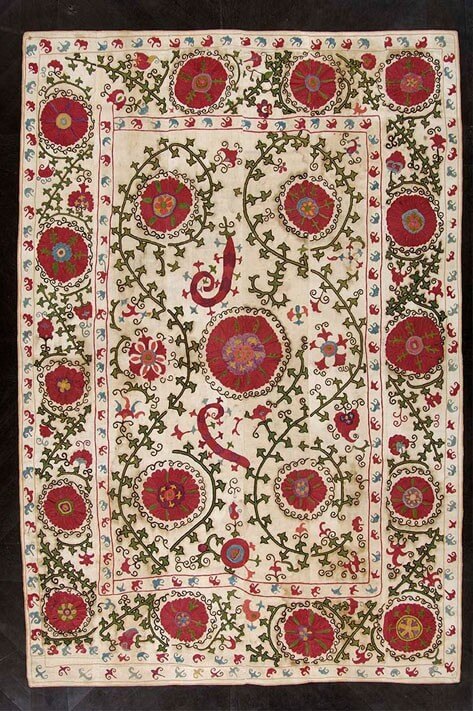
I tend to favor works in the collection that don’t go on view often. Maybe I just like an underdog, but also those works feel more special because they remind me how lucky I am to get to see them. If I had to pick one of these examples, it would be a painting by Paul Wiesenfeld, Interior with Apples, from 1975. I first encountered this work early during my tenure at Del Art and it has continued to hold my interest even though it is rarely on view at the museum. I love the contrast between the haphazard furniture arrangement and the rigorously detailed rendering of the rug pattern, all awash in a golden late day light.